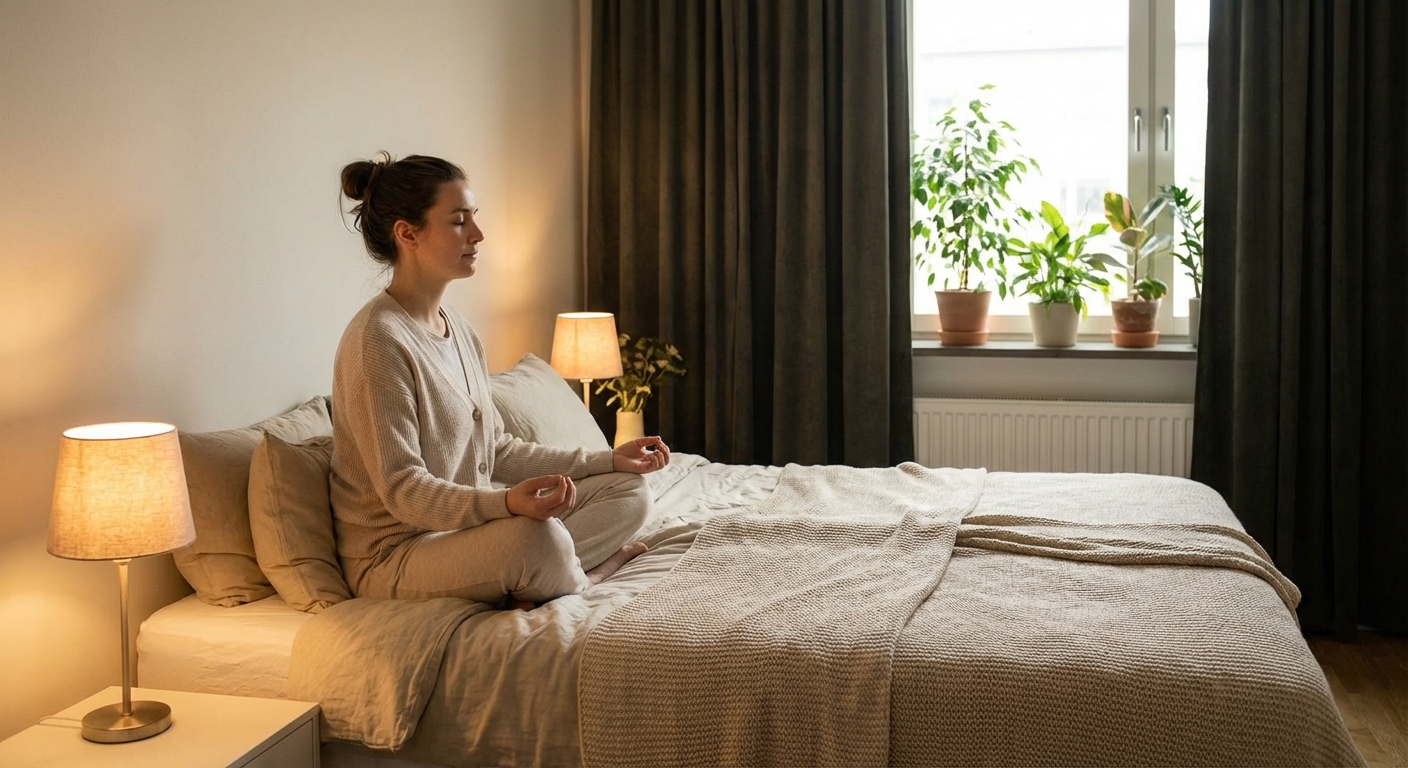
Mindfulness often focuses on inner experience—breath, thoughts, emotions. Yet our outer environment quietly shapes how safe and relaxed we feel. Nowhere is this more true than in the bedroom.
Why Your Space Matters More Than You Think
When your sleep space feels cluttered, bright, or associated with work and stress, the body may stay subtly on guard. When it feels calm, simple, and predictable, your nervous system receives clear signals that it can soften.
You don’t need a perfect, minimalistic room to sleep well. You also don’t need to buy special products. With gentle attention, you can gradually transform your bedroom into a sanctuary that supports deep rest and mindful presence.
Step 1: Clarify the Intention of Your Space
Before changing anything, pause to sense how you want to feel in your bedroom.
You might choose words like:
- Quiet
- Safe
- Soft
- Warm
- Spacious
- Grounded
Write down two or three words that resonate. These become a compass for every small decision: lighting, sounds, objects, colors.
A Short Intention-Setting Practice
- Stand or sit in your bedroom.
- Take three slow breaths, feeling your feet on the ground or your body on the chair.
Ask yourself gently: "What would help this space feel more restful for me?"
4. Listen for simple answers: "less clutter on the nightstand," "softer light," "fewer screens."
Let your answers be practical rather than idealized.
Step 2: Light as a Signal for the Nervous System
Light is one of the strongest regulators of your internal clock.
Daytime: Welcome Natural Light
If possible, let natural light enter your room in the morning by opening curtains or blinds. Even a few minutes of daylight helps anchor your circadian rhythm, which supports earlier and deeper sleep at night.
Evening: Soften and Dim
As night approaches:
- Shift from bright overhead lights to lamps or warm bulbs.
- If you use screens, reduce brightness and consider blue-light filters.
Mini Practice: The Light Ritual (2 minutes)
Each evening, when you dim lights or turn on a softer lamp, consciously mark the transition:
"The day is closing. I’m inviting my body toward rest."
Over time, this becomes a cue that tells your nervous system: we’re safe, we’re slowing down.
Step 3: Soundscapes That Soothe
We easily overlook sound, but the nervous system is always listening.
Notice Your Baseline
Sit quietly in your bedroom for one minute. What do you hear?
- Traffic?
- Voices?
- Electrical hum?
- Silence?
Notice how these sounds land in your body—tightening, softening, or neutral.
Gentle Adjustments
- If outside noises disturb you, consider white noise, nature sounds, or a simple fan.
- If total silence feels unsettling, a soft soundtrack of rain, waves, or distant birdsong can offer a soothing anchor.
Mindful Listening Practice (5 minutes)
- Lie or sit comfortably.
- Choose a soft soundscape (or the natural sounds present).
- Let your awareness rest on the sounds—near, far, changing.
- Each time the mind wanders, gently return to listening, without forcing.
This not only aids sleep; it also deepens your capacity to rest in present-moment experience.
Step 4: Tending to Clutter with Kindness
Clutter is not a moral issue. Many of us keep objects near the bed as reminders of things we care about. But visual noise can make it harder for the mind to settle.
You don’t need to overhaul your room. A few small, kind choices can open a sense of space.
The One Surface Practice (10–15 minutes)
- Choose one small area—perhaps your nightstand.
- Remove everything from it.
- Gently ask: "Does this object support rest or tension?" as you hold each item.
Keep only what feels supportive—for example:
- A lamp or candle - A book of poetry or wisdom - A glass of water - A small plant or meaningful object
Let the rest live elsewhere. You are not throwing away your life; you are simply giving your sleep space more room to breathe.
Research suggests that clutter can contribute to feeling overwhelmed. A calmer visual field supports a calmer inner field.
Step 5: Rethinking Screens and Work in Bed
Many people use laptops, phones, or even work materials in bed. There’s no shame in this—often it’s practical or habitual. Yet, when the bed becomes a place for emails, social media, or problem-solving, the brain learns: This is where we stay alert.
Gentle Boundaries, Not Rigid Rules
Instead of strict bans, try small shifts:
- If possible, finish work-related tasks outside the bedroom.
- Set a phone "curfew"—for example, no stimulating apps 30–60 minutes before sleep.
- If you do use your phone in bed, choose calming content: a guided meditation, a soft story, or relaxing audio.
Screen Transition Practice (3 minutes)
Before putting your device aside:
- Close all tabs or apps.
- Place one hand on the device, one hand on your heart.
- Silently say: "Thank you, I’m done for today. It’s time to rest now."
- Physically set the device aside, ideally out of reach.
This simple ritual acknowledges the mental load you’ve carried and marks the shift to rest.
Step 6: Textures, Temperature, and the Senses
Your senses are gateways to the present moment. Small adjustments can help your body feel more at ease.
Temperature
Most people sleep better in a slightly cool room.
- Experiment with lighter pajamas and a cooler room, or warmer blankets in a cooler space.
- Notice how your body responds and adjust gradually.
Textures
- Choose bedding and sleepwear that feel pleasant on your skin.
- If new items aren’t accessible, see if washing existing linens with a gentle scent or softener makes them feel fresher.
Sensory Grounding Practice (3–5 minutes)
Once in bed:
- Notice the weight of the blanket on your body.
- Feel the texture of the sheets against your skin.
- Sense the temperature of the air on your face.
- Let these sensations be your anchor, returning to them whenever thoughts pull you away.
This is mindfulness in its simplest form: coming home to the senses.
Step 7: A Small Evening Altar of Calm
You might create a tiny, personal "altar" or corner that represents rest and presence.
This could include:
- A candle or soft light
- A stone, shell, or natural object
- A small piece of art or image that evokes peace
- A short phrase or quote that reminds you to soften
Evening Altar Practice (2 minutes)
Before bed:
- Stand or sit near this space.
- Take two or three mindful breaths.
- Read or remember your chosen phrase—for example, "Nothing more is required of me tonight." or "This day is complete."
Let this be a daily reminder that rest is not indulgent; it is essential.
Let Your Sanctuary Evolve Slowly
Turning your bedroom into a quiet sanctuary is not a one-time project. It’s an ongoing relationship with your space—a practice of noticing what helps you feel safe enough to sleep.
Instead of aiming for perfection, consider this question:
"What is one small change I can make this week to support my rest?"
Perhaps it’s clearing a single surface, dimming one light earlier, or sitting in quiet for a minute each night. Over time, these gentle actions add up.
As your room softens, you may notice something else softening too: the way you speak to yourself at the end of the day. In that softening, sleep can arrive not as something you must chase, but as something that naturally blossoms in a sanctuary you’ve lovingly created for yourself.