If you’ve explored mindfulness or yoga, you’ve likely encountered a variety of breathwork techniques — each with its own name, rhythm, and promise. It can feel confusing: Which one is right for me? Am I supposed to do them all?
Many Paths, One Breath
The good news is that there is no single “best” technique. Different patterns can support different needs, and what works for you may change from day to day.
This guide offers a calm, side-by-side comparison of several popular breathwork practices, along with simple suggestions for when and how to use them. Think of it as a gentle menu, not a prescription.
1. Diaphragmatic (Belly) Breathing
Essence: Breathing deeply into the belly to engage the diaphragm and soften tension.
How it works:
- When you inhale, your diaphragm contracts and moves downward, allowing your lungs to fill fully.
- When you exhale, it relaxes and moves upward, helping air leave your lungs.
Basic practice:
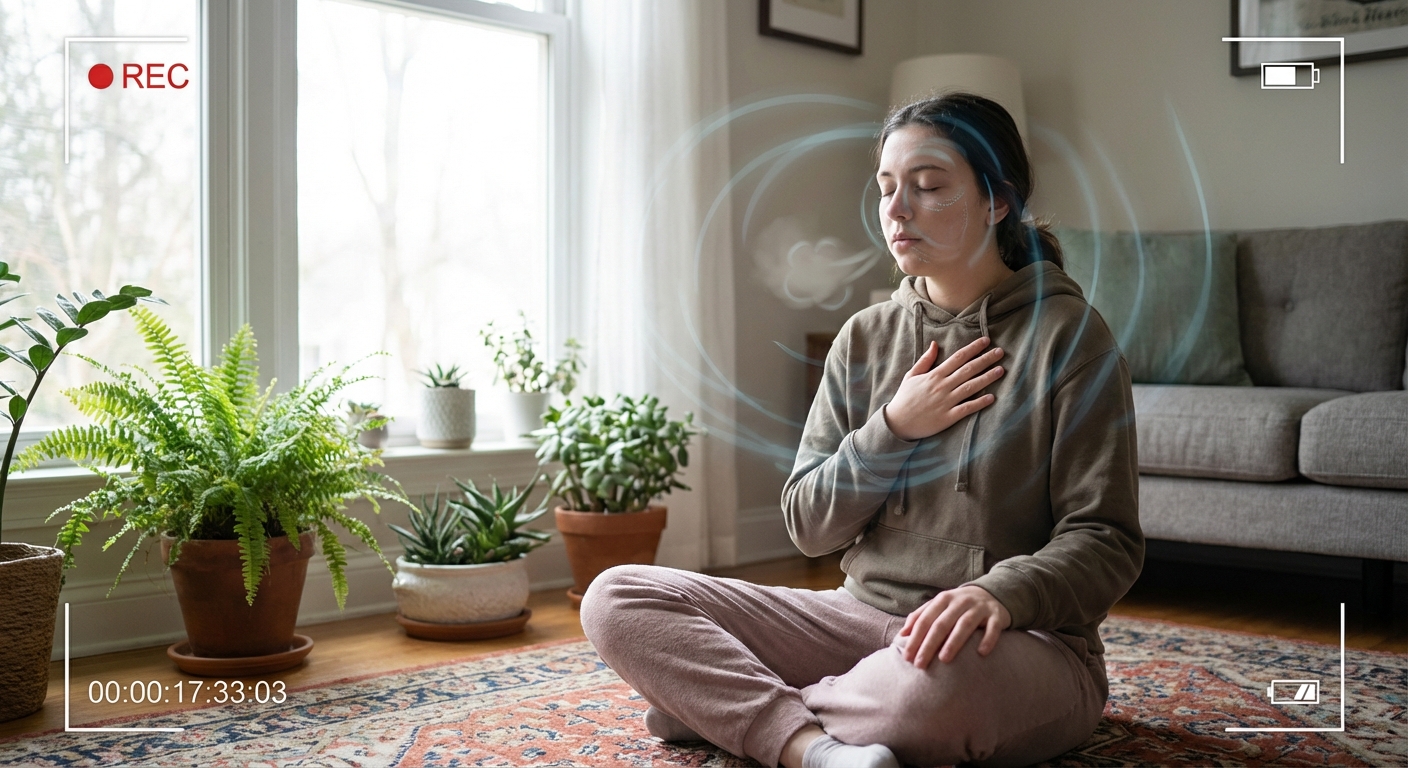
- Sit or lie comfortably. Place one hand on your chest, one on your belly.
- Inhale through your nose, inviting your belly-hand to rise while your chest-hand stays relatively still.
- Exhale slowly through your nose or mouth, letting the belly-hand fall.
- Continue for 3–5 minutes.
Best for:
- General relaxation
- Easing into meditation
- Supporting digestion and posture
Gentle note: If belly breathing feels unfamiliar or uncomfortable, start small. Even a few softer, deeper breaths can be enough.
2. Box (Square) Breathing
Essence: Even counts for inhale, hold, exhale, hold — like tracing the sides of a square.
Typical pattern: 4–4–4–4 (inhale–hold–exhale–hold)
Basic practice:
- Inhale through the nose for a count of 4.
- Hold the breath comfortably for a count of 4.
- Exhale through nose or mouth for a count of 4.
- Rest at the bottom of the exhale for a count of 4.
Repeat for 4–8 rounds.
Best for:
- Gaining focus before tasks or conversations
- Creating a sense of structure and stability
- Brief resets during the workday
Gentle note: If breath holds feel stressful, shorten them or remove them. You might try a simple 4–4 pattern (inhale–exhale) instead.
3. Coherent / Resonant Breathing
Essence: Slow, rhythmic breathing around 5–6 breaths per minute to harmonize the nervous system.
Typical pattern: 4–6 or 5–5 (inhale–exhale)
Basic practice:
- Inhale through your nose for 5 seconds.
- Exhale through your nose for 5 seconds.
- Repeat for 5–15 minutes.
Best for:
- Building long-term stress resilience
- Deepening meditation
- Evening unwinding or pre-sleep routines
Science note: Research suggests this pace can improve heart rate variability and emotional regulation.
4. 4-7-8 Relaxation Breathing
Essence: A specific pattern often used for winding down and supporting sleep.
Typical pattern: Inhale 4 – Hold 7 – Exhale 8
Basic practice:
- Inhale quietly through your nose for a count of 4.
- Hold your breath gently for a count of 7.
- Exhale audibly through your mouth for a count of 8.
Start with 3–4 rounds, and gradually increase if comfortable.
Best for:
- Evening relaxation
- Easing pre-sleep restlessness
- Moments of intense anxiety (used gently)
Gentle note: If the holds feel challenging, shorten or skip them. A simple 4–8 pattern (inhale–exhale) can also be deeply calming.
5. Alternate Nostril Breathing (Nadi Shodhana)
Essence: Gently alternating the nostril you breathe through to balance energy and focus.
Basic practice (simple version):
- Sit comfortably with a tall yet relaxed spine.
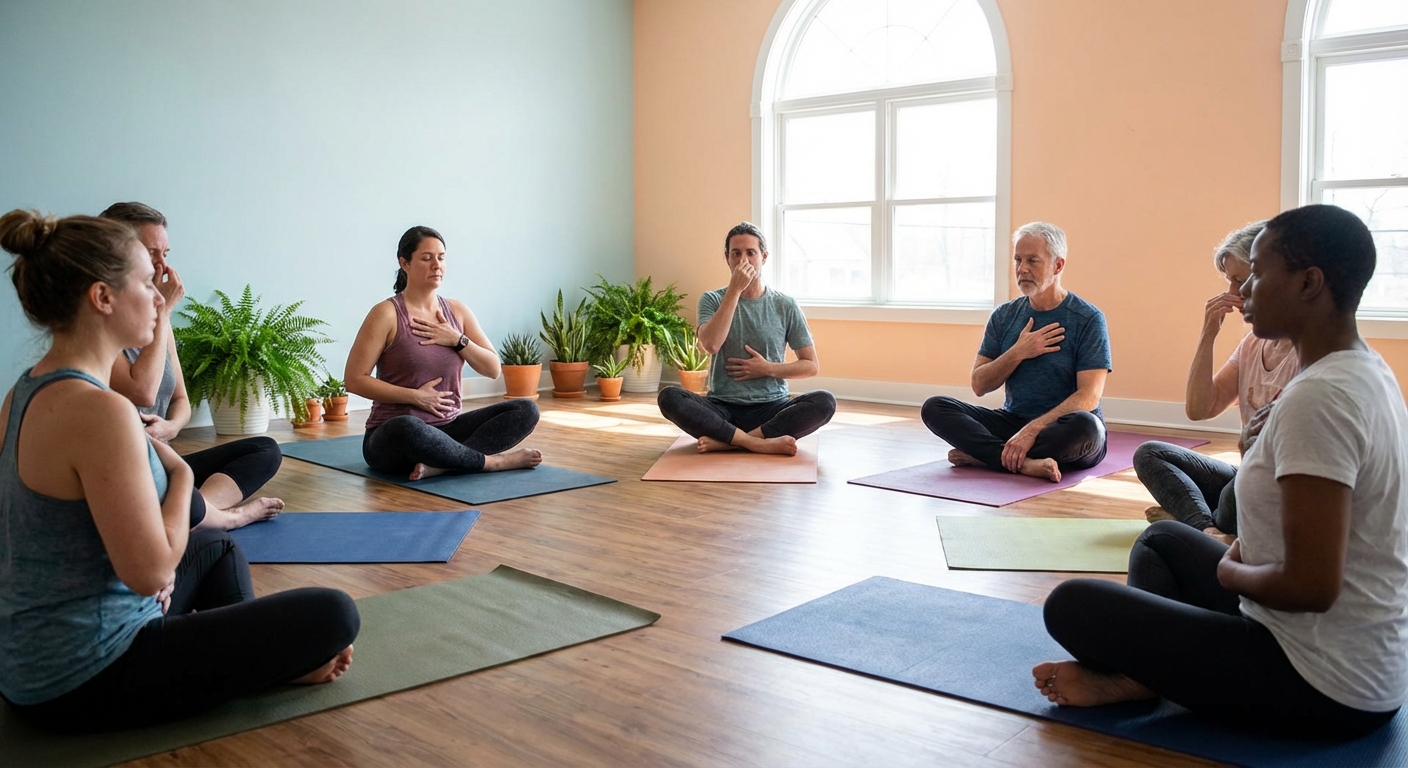
- Use your right hand: index and middle fingers rest lightly between your eyebrows; thumb near right nostril; ring finger near left nostril.
- Close your right nostril with your thumb and inhale through the left.
- Close the left nostril with your ring finger, open the right, and exhale through the right.
- Inhale through the right nostril.
- Close the right, open the left, and exhale through the left.
This completes one round. Practice 5–10 rounds.
Best for:
- Centering before meditation
- Balancing feelings of scatteredness or fogginess
- Quiet, focused breaks during the day
Gentle note: If using the hand position feels cumbersome, you can simply imagine air moving in and out through one nostril at a time.
6. Mindful Breath Watching
Essence: Observing the natural breath without controlling it.
Basic practice:
- Sit or lie down comfortably.
- Let your breath be exactly as it is.
- Rest your attention where you feel your breath most clearly.
- When your mind wanders, kindly return to the feeling of breathing.
Best for:
- Traditional mindfulness practice
- Building patience and self-compassion
- Times when structured techniques feel like “too much”
Gentle note: If focusing on breath feels activating, you might soften your attention — alternate between noticing your breath and sounds in the room, for example.
How to Choose the Right Practice for the Moment
You might imagine three gentle questions:
What do I need right now?
Soothing, focus, energy, balance, or simply presence?
How much time do I have?
One minute, five minutes, or a longer session?
What feels kind to my body today?
Is breath-holding okay, or do I want softer, simpler rhythms?
A few example pairings
- Feeling anxious or tense?
Try extended exhale breathing, coherent breathing, or 4-7-8 (modified if needed).
- Feeling scattered or distracted?
Try box breathing or alternate nostril breathing.
- Preparing for meditation or yoga?
Try belly breathing or mindful breath watching.
- Heading to bed?
Try coherent breathing or a short 4-7-8 session, staying within your comfort zone.
Practicing Without Pressure
Breathwork is meant to support you, not become another standard to live up to. Some days, one or two conscious breaths might be all that feels accessible — and that is enough.
A few compassionate guidelines:
- Start small: 1–3 minutes is a meaningful beginning.
- Let go of expectations: You don’t need to feel instantly calm for the practice to be valuable.
- Stay curious: Notice how different patterns affect you without judgment.
- Adjust freely: You’re allowed to change counts, durations, or techniques.
Over time, you may find that certain practices feel like old friends: steady, familiar, and always available. You don’t have to master them all. One soft, intentional breath is already a complete practice.
Right now, you might gently inhale, exhale, and simply notice: This is my breath. This is my moment of choice.