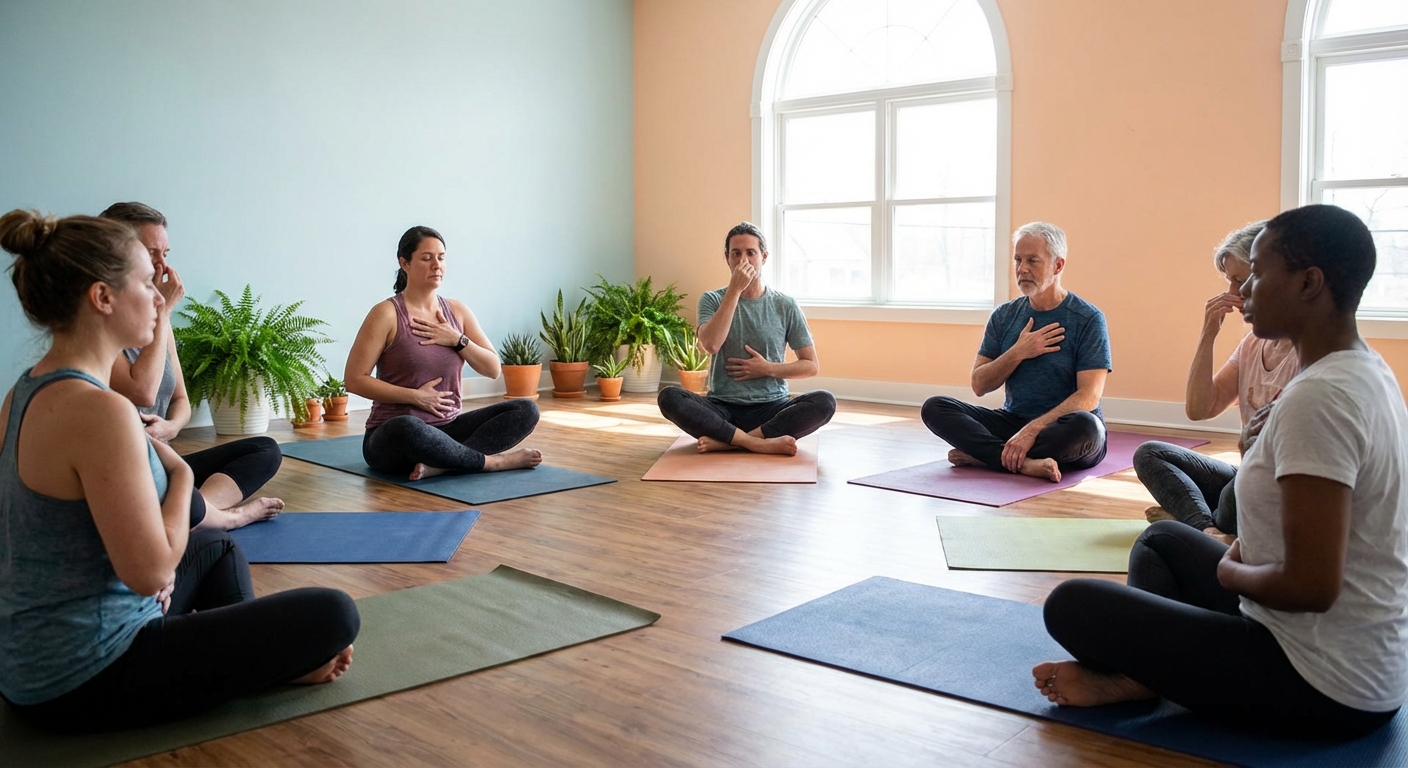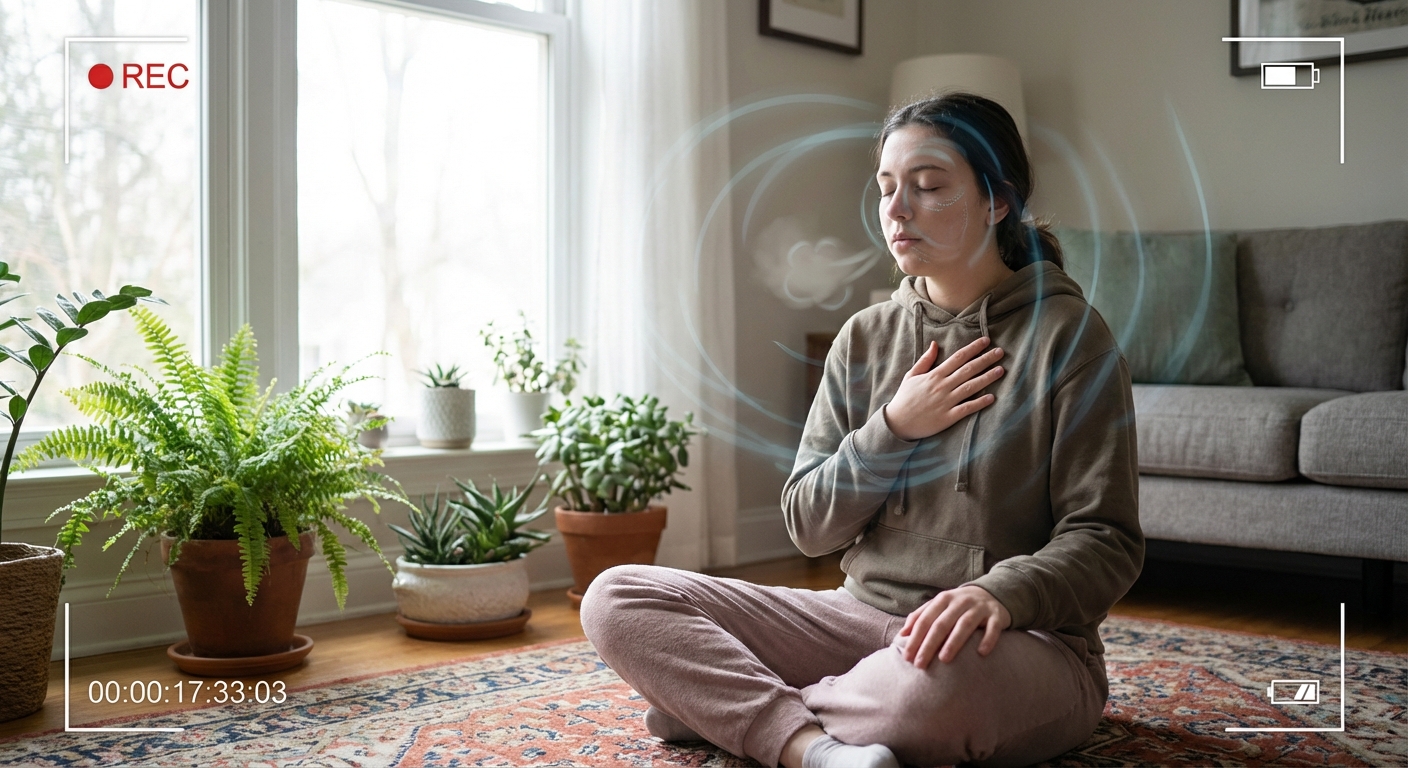
Stress often arrives before we even notice it: a tight jaw, a quickened heart, a mind racing ahead. Breathwork offers a way to meet stress not with force, but with gentle, rhythmic cooperation.
Breathing Your Way Into a Different Kind of Day
This article is an explainer for curious minds: a look at how and why breathwork works, what science is discovering, and how you can use this knowledge kindly rather than rigidly. You don’t need a biology degree to follow along — just your own breathing body.
Your Breath and Your Nervous System: A Quiet Dialogue
Your nervous system has two main branches that are deeply influenced by your breath:
- Sympathetic nervous system – prepares you to respond: increased heart rate, sharper focus, readiness to move.
- Parasympathetic nervous system – helps you rest and digest: slower heart rate, relaxed muscles, easier digestion.
These systems are not “good” or “bad.” You need both. But modern life often leaves us leaning heavily on the sympathetic side — always slightly braced.
Your breath acts as a conversation between these branches:
- Faster, shallower breathing tends to support sympathetic activation.
- Slower, deeper, more rhythmic breathing tends to enhance parasympathetic activity.
By gently changing your breathing pattern, you’re sending small, consistent messages to your nervous system: “You can soften. You’re safe enough in this moment.”
The Vagus Nerve: A Pathway of Calm
One of the key players in this process is the vagus nerve — a long nerve that connects your brain with your heart, lungs, and digestive system.
Research shows that slow, intentional breathing can stimulate the vagus nerve, which in turn:
- Lowers heart rate
- Supports digestion
- Reduces levels of stress hormones
- Improves heart rate variability (HRV), a sign of flexibility and resilience in your system
Think of the vagus nerve as a communication highway from body to brain. When your breath is slow and steady, it’s like sending a steady stream of reassurance upward: “Things are okay enough right now.”
Breathwork and the Mind: Clearer Skies for Thoughts
When stress is high, the part of your brain responsible for quick reactions becomes very loud, while the parts responsible for reflection and perspective can get temporarily quieter.
Several studies have found that slow breathing practices can:
- Decrease activity in stress-related regions like the amygdala
- Increase connectivity in networks associated with attention and self-awareness
- Support emotional regulation and more flexible thinking
In everyday terms, this can look like:
- Pausing before reacting to an upsetting message
- Feeling slightly less overwhelmed by your to-do list
- Being able to sit with difficult emotions for a bit longer
Mindfulness practitioners often describe breathwork as “clearing the sky” so thoughts and feelings can move through more easily, like clouds.
Simple Science-Backed Patterns to Try
All breathing is not identical in its effects. Here are three gentle, well-researched patterns you can explore. Always prioritize comfort; if something feels off, return to your natural breath.
1. Coherent or Resonant Breathing (~6 Breaths Per Minute)
What it is: A slow, even breathing rate — often about 5–6 breaths per minute — that supports communication between the heart and brain.
Try this:
- Inhale through your nose for 5 seconds.
- Exhale through your nose for 5 seconds.
- Repeat for 5–10 minutes.
If 5 seconds feels too long, use 4 seconds in and 4 seconds out.
What studies suggest: This rhythm can improve HRV, balance the autonomic nervous system, and support emotional regulation.
2. Extended Exhale Breathing
What it is: A pattern where the exhale is slightly longer than the inhale, gently emphasizing the parasympathetic side.
Try this:
- Inhale through the nose for 4 seconds.
- Exhale slowly through nose or mouth for 6 seconds.
- Continue for 2–5 minutes.
Adjust the numbers to your comfort, keeping the exhale longer.
What studies suggest: Longer exhales can increase vagal tone and help reduce anxiety symptoms.
3. Mindful Breath Awareness (Non-Controlling)
What it is: Instead of changing your breath, you rest your attention gently on it as it is.
Try this:
- Sit or lie down comfortably.
- Notice where you feel your breath most clearly — nostrils, chest, or belly.
- Let your attention rest there, as if you’re listening to a soft sound.
- When your mind wanders (and it will), kindly bring it back.
What studies suggest: Regular mindful breathing practice can change brain regions involved in attention, self-awareness, and emotional balance.
A Short, Grounded Practice: The 10-Breath Reset
You can use this simple practice almost anywhere — before a call, after a difficult conversation, or when you notice tension.
- Pause and feel your feet or the weight of your body.
- Inhale through your nose for about 4 seconds.
- Exhale through your nose or mouth for about 6 seconds.
- Count each exhale up to 10.
If you lose count, simply start again. This isn’t a test; it’s an invitation to return.
10 conscious breaths may take less than a minute, but they can create a noticeable shift in how you feel and respond.
Breathwork, Trauma, and Safety
For some people — especially those with a history of trauma, anxiety, or breathing difficulties — focusing on the breath can feel uncomfortable or even triggering.
If this resonates with you, please know:
- There is nothing wrong with you if breath awareness feels difficult.
- You can keep your attention mostly on external anchors (sounds, sights, touch) and only lightly on your breath.
- You might shorten practices, keep your eyes open, or skip breathwork entirely when needed.
- Working with a trauma-informed therapist or mindfulness teacher can offer additional support.
The goal is always safety and kindness, not forcing yourself to endure distress.
Letting the Science Support, Not Control, Your Practice
Understanding how breathwork functions can be empowering, but it can also become another way to pressure yourself: “I should be breathing at exactly 6 breaths per minute,” or “If my HRV isn’t improving, I’m doing it wrong.”
A gentler approach might be:
- Use the science as a lantern, not a measuring stick. Let it guide, not judge.
- Adjust techniques to fit your body, your mood, your life context.
- Remember that small, consistent practices are more powerful than perfect, intense ones.
Each time you soften into a slow breath, you are already participating in the quiet rewiring of your stress patterns. Your nervous system learns through repetition and kindness, not force.
Living With a Different Rhythm
Breathwork won’t remove all stress from your life, and it doesn’t need to. Instead, it gently changes the way stress moves through you. You may begin to notice a bit more space between stimulus and response, a bit more softness in your body, a bit more willingness to pause.
Over time, this becomes less a technique and more a way of living: moving through your days in conversation with your own breath, allowing it to guide you back, again and again, to a quieter center.
Whenever you’re ready, you can pause here and feel just three slow breaths — not as an experiment, but as a small act of kindness toward yourself.