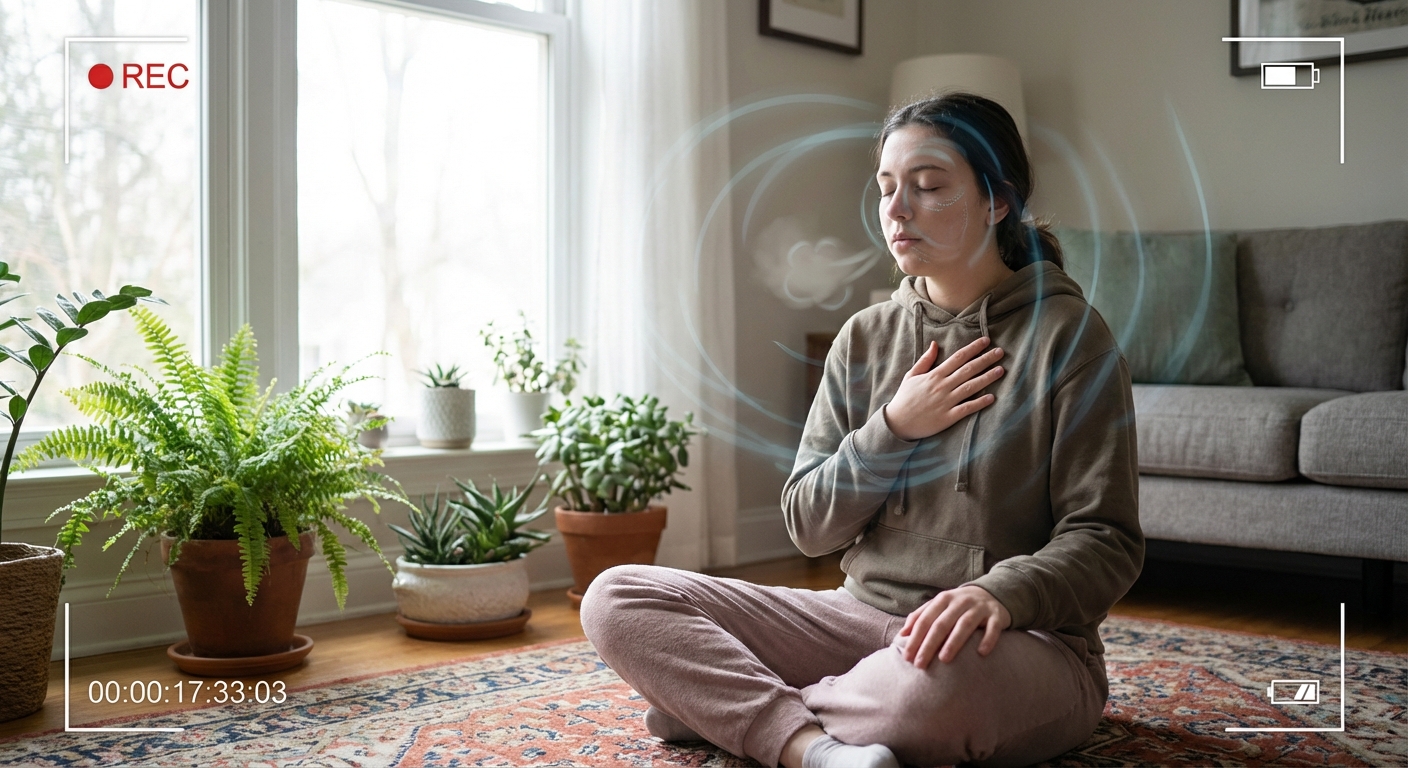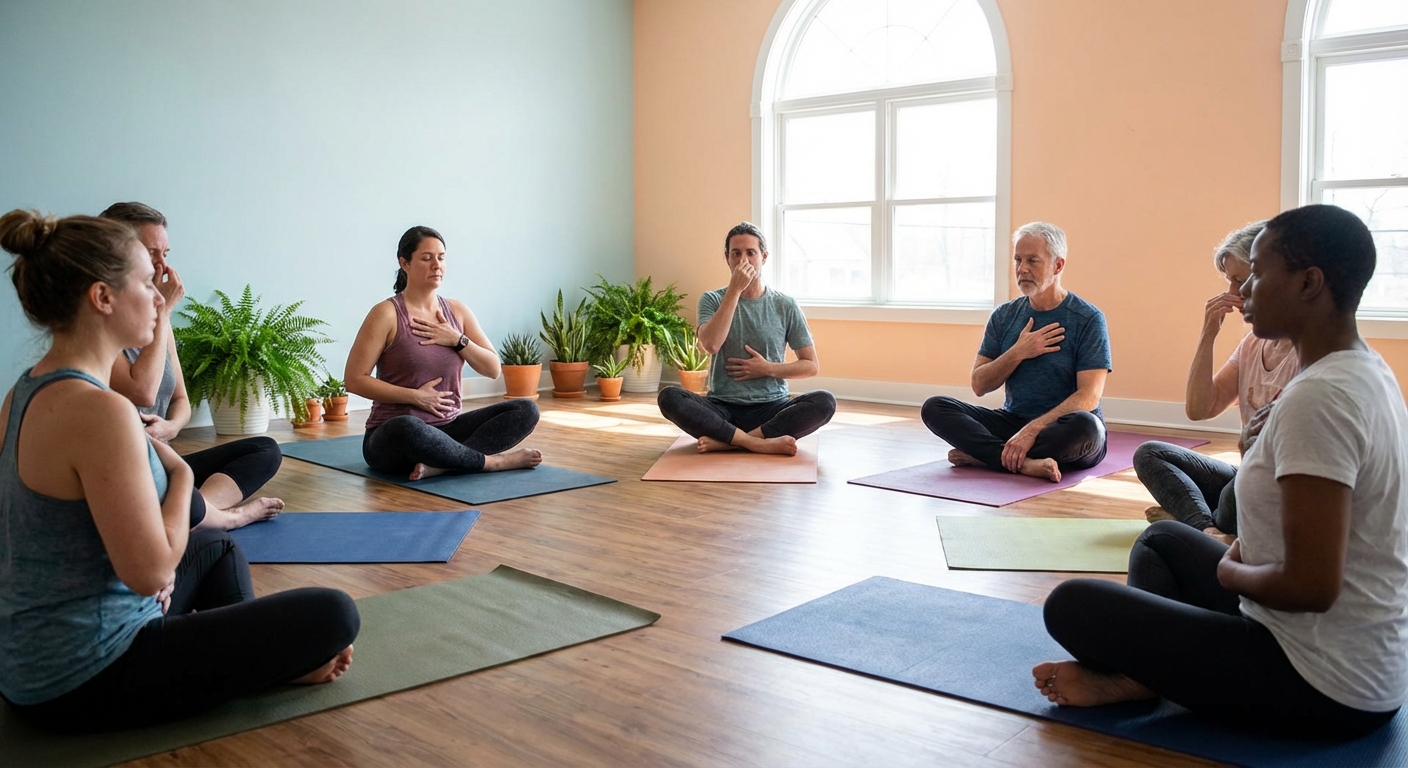
Your day is full of transitions: waking, working, pausing, connecting, and finally, resting. Each transition is a subtle stress on the nervous system, asking it to shift gears again and again.
A Softer Way to Move Through Your Day
Breathwork can become a set of quiet rituals that help you glide more gently through these shifts. These practices are not strict routines to add pressure, but soft invitations to meet each part of your day with a little more kindness.
Below are five breath-based rituals, each designed for a specific moment in your day. Choose one or two to begin with. Let them become familiar companions rather than tasks on a list.
1. Morning Awakening: Sunlit Belly Breathing
When: Just after waking, still in bed or seated at the edge.
Why: To greet your nervous system with steadiness instead of urgency.
How to practice (3–5 minutes):
- Gently notice your body waking up. Feel the weight of your body on the mattress or chair.
- Place one hand on your belly. Let your jaw and shoulders soften.
- Inhale slowly through your nose and invite your belly to rise into your hand.
- Exhale through your nose, allowing the belly to fall with ease. No pushing or forcing.
- If it feels comfortable, breathe in for a count of 4 and out for a count of 4.
Repeat for 10–15 breaths. You might silently name the qualities you wish to carry into your day: “Inhale, steadiness. Exhale, tension.”
Science note: Morning belly breathing gently encourages your diaphragm to move fully, supporting oxygen exchange and activating the parasympathetic nervous system — your built-in calming system.
2. Mid-Morning Focus: Box Breathing for Clarity
When: Before a meeting, focused work session, or challenging conversation.
Why: To bring your mind and body into the same room.
How to practice (2–3 minutes):
Box breathing (also called square breathing) uses equal lengths for inhale, hold, exhale, and hold.
- Sit comfortably with your feet on the floor if possible.
- Inhale through your nose for a count of 4.
- Gently hold your breath for a count of 4 (without strain).
- Exhale slowly through your nose or mouth for a count of 4.
- Rest at the bottom of the exhale for a count of 4.
Repeat this cycle for 4–8 rounds.
If the holds feel uncomfortable, remove them and simply inhale and exhale for equal counts.
Science note: Studies show that paced, even breathing can calm overactivity in stress-related brain regions and support more balanced attention.
3. Afternoon Reset: The 4–6 Grounding Breath
When: During an energy dip, emotional wobble, or between tasks.
Why: To gently downshift your nervous system and reduce mental clutter.
How to practice (2–5 minutes):
- If you can, place both feet flat on the ground. Feel their contact with the floor.
- Breathe in through your nose for a count of 4.
- Breathe out slowly through your nose or lightly parted lips for a count of 6.
- Let your shoulders drop with each exhale, as though they’re melting away from your ears.
Continue for 10–20 breaths, adjusting the counts if needed. The key is that the exhale is slightly longer than the inhale.
Science note: A longer exhale stimulates the vagus nerve, which is part of the parasympathetic system. This can lower heart rate and help ease anxiety or agitation.
4. Evening Transition: Sighing Out the Day
When: After work, before dinner, or when shifting from “doing” to “being.”
Why: To help your body let go of accumulated tension.
Sighing is a natural reset for your respiratory system. We already do it instinctively when overwhelmed or relieved. Here, we simply make it more conscious.
How to practice (1–3 minutes):
- Stand or sit in a way that lets your chest move freely.
- Inhale comfortably through your nose, filling your chest and perhaps your belly.
- Exhale through your mouth with a gentle, audible sigh. Let your jaw relax, lips loose, shoulders dropping.
- Don’t force drama into the sound; it can be soft and natural.
Try 5–10 sighs, spaced with a few quiet breaths between them.
Science note: Research suggests that “physiological sighs” — a deep inhale followed by a longer exhale — can quickly lower physiological arousal and help recalibrate breathing patterns.
5. Bedtime Unwinding: 4-7-8 Restful Breathing
When: In bed, lights dim, ready to drift toward sleep.
Why: To ease the transition from mental activity into restful surrender.
The 4-7-8 pattern is a classic relaxation technique. Reduce the counts if you feel strain.
How to practice (3–5 minutes):
- Lie comfortably on your back or side, with your body supported.
- Inhale quietly through your nose for a count of 4.
- Gently hold the breath for a count of 7.
- Exhale audibly through your mouth for a count of 8, as though fogging a window.
Start with 3–4 rounds, and gradually increase up to 8 rounds over time if it feels good.
Safety note: If breath holding feels uncomfortable, skip the 7-count hold and simply lengthen your exhale instead.
Science note: Longer exhales and gentle attention to breathing have been linked with reductions in heart rate and improved readiness for sleep.
Practicing With Kindness, Not Perfection
You may forget these rituals often. You may remember them only when you feel stressed. That’s okay. Each time you recall your breath, you’re reinforcing a new habit of care.
A few supportive reminders:
- If you miss a practice, there is nothing to “make up.” You can begin again at the next breath.
- If certain counts or techniques don’t suit you, adjust them. Your comfort is a wise guide.
- If emotions arise as you slow down, that’s natural. You can pause, return to your normal breath, or open your eyes.
Breathwork is not about controlling your experience; it’s about meeting your experience with a little more softness.
As you explore these simple rituals from dawn to dusk, notice how your days feel when each chapter is punctuated by a moment of mindful breathing. Not perfect, not polished — just a bit more spacious, a bit more kind.