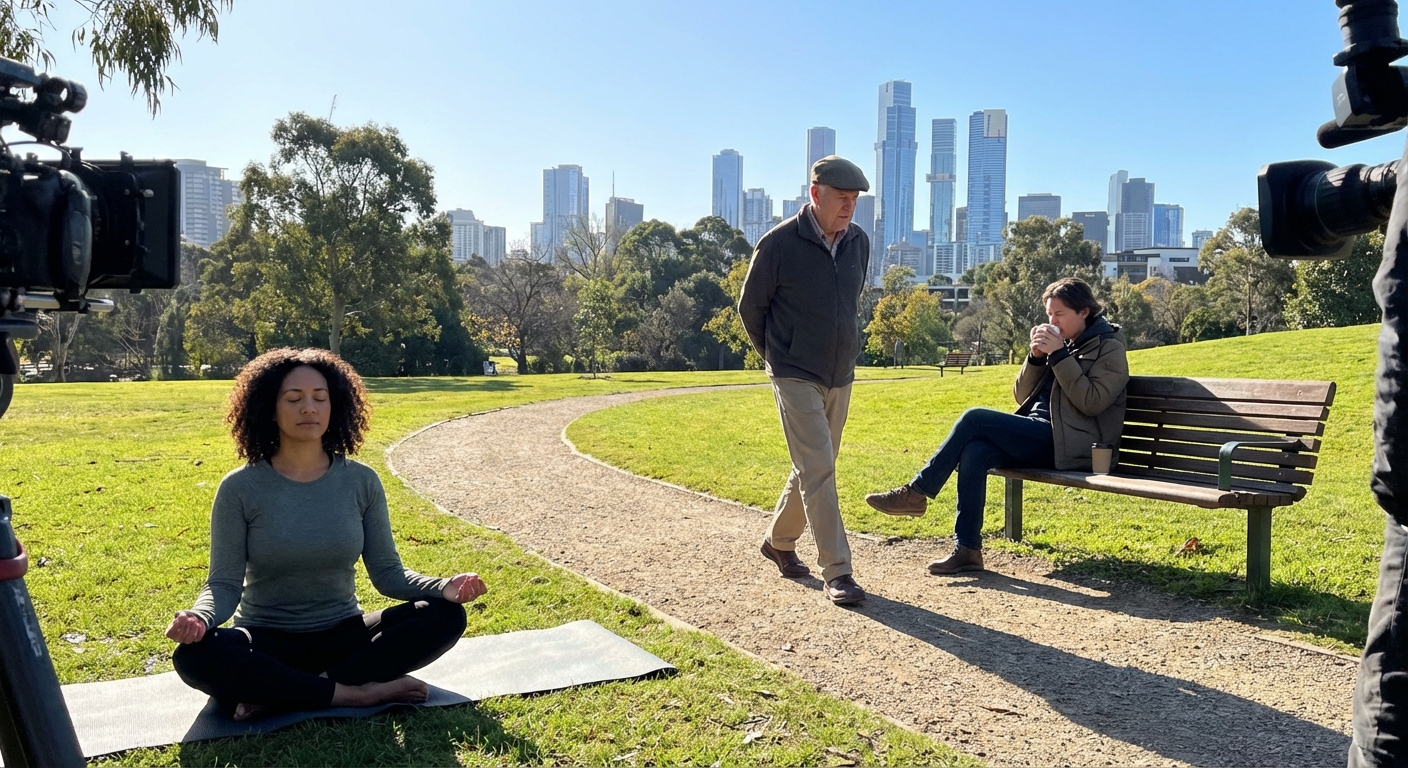
Many people first meet mindfulness through a specific form—usually sitting meditation. While this is a valuable doorway, it is only one path among many. Mindfulness can infuse the way you walk, speak, work, and rest.
Mindfulness as a Way of Being, Not Just a Technique
This article offers a simple “practice map” for different levels of experience, not as a hierarchy, but as a menu. You’re welcome anywhere on this map. You can stay, wander, revisit, or rest as needed.
We’ll explore three broad forms: sitting, walking, and living mindfulness. Each section includes gentle practices you can try today.
Level 1: Sitting Mindfulness – Arriving Where You Are
Sitting practice offers a stable container for attention. You don’t need special cushions or postures; comfort and ease matter more than perfection.
A 5-Minute Breath & Body Practice
- Find your seat. Sit on a chair, couch, or cushion. Let your feet rest on the floor if possible. Allow your spine to be upright but not rigid, like a tree with some flexibility.
- Soften your gaze. You may gently close your eyes or keep them soft and unfocused.
- Feel contact. Notice where your body meets the chair or floor. Sense your weight being held.
- Meet your breath. Bring your attention to the sensation of breathing—perhaps at the nostrils, chest, or belly. You’re not trying to change it; just feel the in-breath and out-breath.
- Notice and return. When your mind wanders (it will), gently acknowledge it—“thinking,” “planning,” “remembering”—and then return to the breath.
- Close with kindness. After 5 minutes, take one deeper breath. Notice how you feel, without needing it to be any particular way. You might thank yourself for practicing.
This simple practice strengthens your attention and builds familiarity with your inner landscape.
Noticing Common Challenges
- Restlessness: You can shorten the practice or alternate sitting with standing.
- Sleepiness: Try sitting with a slightly more upright posture or with eyes gently open.
- Self-judgment: When harsh thoughts arise, treat them as passing events rather than truths.
You might silently say, “This, too, is part of practice.”
Level 2: Walking Mindfulness – Bringing Awareness into Motion
Mindfulness doesn’t only belong to stillness. Walking practice helps bridge formal meditation and everyday movement.
A 10-Minute Mindful Walk
Choose a hallway, garden, sidewalk, or room where you can walk safely.
- Begin standing. Feel your feet on the ground. Notice your posture.
- Start slowly. As you take a step, feel the heel, then the ball, then the toes making contact with the ground.
- Coordinate with breath (optional). You might notice how many steps you naturally take per inhale and exhale, without forcing a rhythm.
- Anchor attention in the feet. When your mind drifts to thoughts, gently guide it back to the sensation of stepping.
- Include your surroundings. After a few minutes, also notice sounds, light, and air on your skin—while keeping some attention in your feet.
If a slower pace doesn’t feel natural, walk at a comfortable speed while simply paying closer attention to the body in motion.
Short “Transition Walks”
You can also use transitions:
- From one room to another
- From your car to your home
- From your desk to the kitchen
For those few steps, feel each footfall. You could even repeat a soft phrase, such as, “Arriving… arriving…” with each step.
Research suggests that mindful walking, even for brief periods, can reduce stress and improve mood, particularly when combined with exposure to nature.
Level 3: Living Mindfulness – Weaving Awareness into Daily Life
Living mindfulness is less about adding new practices and more about changing the way you relate to what you already do.
Mindful Listening
Next time you’re in conversation, experiment with:
- Turning your full attention toward the other person’s words and tone
- Noticing the urge to interrupt, fix, or advise
- Allowing a breath before you respond
You might silently ask, “What is it like to be them right now?” This doesn’t mean you ignore your own needs; it simply widens your awareness to include the other person with care.
Mindful Speaking
Before you respond in a conversation, especially a charged one, try this quick check:
- Pause for one breath.
- Ask yourself, “Is what I’m about to say true? Is it kind? Is it necessary right now?”
This isn’t a rule to restrict you, but a gentle guide to align your words with your values.
Mindful Work Moments
At work or during daily tasks, you might explore:
- Single-tasking: Choose one task and give it your full attention for 5–10 minutes.
- Micro-pauses: After completing an email or task, take one breath before starting the next.
- Body checks: Several times a day, notice your posture, jaw, and shoulders. Invite softening.
These small adjustments can reduce cognitive overload and nourish a sense of clarity.
A Compassionate Practice for All Levels: The Self-Kindness Break
Wherever you are on this practice map, self-kindness is a steady companion.
When you notice struggle—physical, mental, or emotional—you can try a Self-Kindness Break:
- Acknowledge: “This is a moment of difficulty.”
- Normalize: “Difficulty is part of being human; I’m not alone in this.”
- Offer kindness: “May I be gentle with myself right now.”
If it feels right, place a hand where you feel the difficulty most—chest, belly, forehead. Research on self-compassion suggests that this kind of warm acknowledgment can reduce stress and enhance resilience over time.
Let Your Practice Be a Circle, Not a Ladder
Rather than viewing levels as steps you must climb, you might imagine them as points on a circle:
- Some days, sitting practice feels right.
- Other days, movement or walking may be more accessible.
- On busy days, you may rely entirely on living mindfulness woven into ordinary tasks.
All of this counts. You do not graduate from one form and leave it behind. Instead, you build a flexible toolkit that you can draw from according to your needs, energy, and circumstances.
If you wish, you can choose one small practice from each category for the week ahead:
- Sitting: 5 minutes of breath and body.
- Walking: A short mindful walk once a day.
- Living: One conversation where you practice mindful listening.
However you proceed, remember: mindfulness is not about achieving a particular state, but cultivating a kinder relationship with the state you are in. You are always allowed to begin again, exactly from where you are.