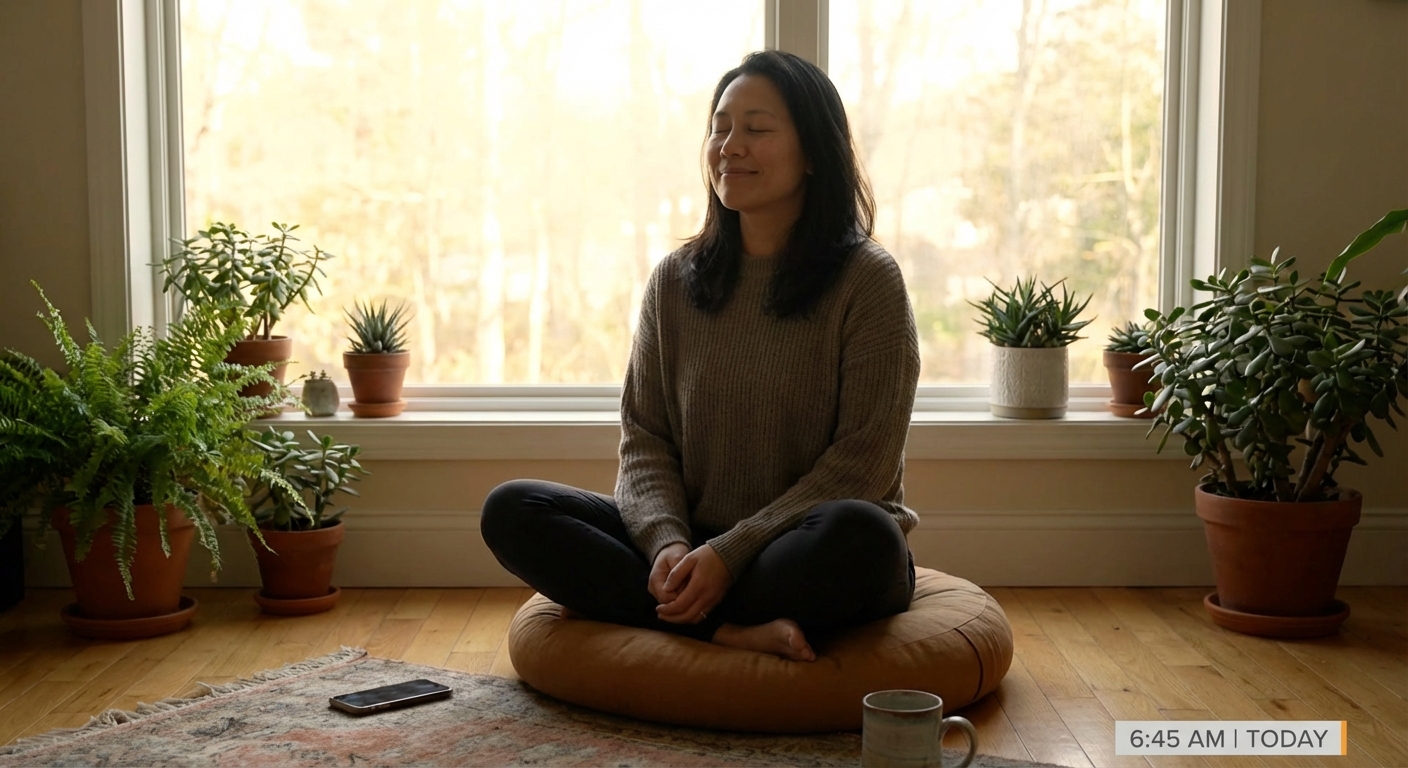
Much of modern life is loud—not only with sounds, but with information, expectations, and internal commentary. Meditation offers a way to listen beneath this noise, not by escaping your life, but by showing up to it more fully.
Meditation as Daily Listening
A checklist may sound rigid, but here we’ll use the idea softly—as a friendly reminder of simple things you can turn toward during the day. You don’t need a quiet room or long sitting sessions. Each item is an invitation to pause, listen, and gently reconnect with yourself.
This guide is meant for practitioners of all levels: if you are new, it offers clear starting points; if you are experienced, it may help refresh and ground your existing practice.
A Gentle Meditation Checklist for Your Day
You don’t need to complete every item. Let this checklist feel like a menu of kind options, not a list of obligations.
1. One Conscious Wake-Up Breath
☐ Did I greet my day with at least one intentional breath?
Upon waking, before reaching for a phone or stepping out of bed, pause:
- Feel the weight of your body supported by the bed.
- Notice the first full breath of the day.
- Silently whisper, "Arriving."
This small act sets a tone of awareness before the day’s momentum begins.
2. A Mindful Sip or Bite
☐ Did I taste at least one sip or bite fully?
Choose a moment—your morning tea, coffee, or a simple piece of fruit.
- Look at what you’re about to consume.
- Notice color, texture, and scent.
- Take one sip or bite slowly, paying attention to the sensations.
No need to eat or drink the entire thing mindfully; one fully attended moment is already practice.
From a scientific perspective, mindful eating has been associated with improved digestion, better regulation of hunger cues, and reduced mindless snacking. But beyond these benefits, it’s a way to honor the ordinary magic of nourishment.
3. A Posture Check-In
☐ Did I notice how I am holding my body?
Several times a day, especially when at a desk or screen:
- Notice the shape your body has taken.
- Are your shoulders creeping up? Is your jaw tight? Are you collapsing into your chest?
On your next exhale, allow a gentle adjustment:
- Let the shoulders soften down and back.
- Widen the collarbones slightly.
- Lengthen the spine without straining.
This is not about “correct” posture; it’s about remembering that the body is part of mindfulness. Studies suggest that posture can influence mood and energy, and that awareness of body sensations (interoception) is a key component of many meditation traditions.
4. A 2-Minute Anchor to the Breath
☐ Did I pause to rest attention on my breath at least once?
You can do this at your desk, on a bus, or in a waiting room.
- Set a timer for 2 minutes if it helps.
- Close your eyes or soften your gaze.
- Choose one place to feel the breath—the nostrils, chest, or belly.
- When the mind wanders (and it will), gently return.
Consider each return an act of kindness, not a correction.
Brain imaging research has shown that even short, repeated meditation sessions can increase gray matter density in brain areas related to attention and emotional regulation over time. Two minutes can be a meaningful part of that pattern.
5. A Moment of Emotional Naming
☐ Did I notice and name at least one emotion today?
Emotions often rush through us unacknowledged, driving our behavior from the background. Naming emotions can create a small space between feeling and reaction.
Try this at any moment:
- Pause and ask, "What am I feeling right now?"
- Offer a simple label: "Sadness," "Tension," "Excitement," "Numbness."
You might discover layers: "I feel anxious, and underneath that, tired."
Research in affect labeling suggests that naming emotions can reduce activity in the amygdala and increase activity in prefrontal regulatory areas, often leading to a quieter, more manageable experience of the feeling.
You are not trying to fix the emotion—only to greet it.
6. A Small Act of Self-Compassion
☐ Did I speak to myself with kindness at least once?
Many of us maintain an ongoing inner commentary that is far harsher than we would ever direct toward a friend. Meditation invites a different tone.
Pick one of these simple phrases and offer it to yourself sometime today:
- "This is hard, and it’s okay to find it hard."
- "May I treat myself gently in this moment."
- "I am learning; I don’t need to be perfect."
Self-compassion research indicates that this style of inner talk is associated with less anxiety and depression, improved resilience, and healthier motivation compared to self-criticism.
7. A Digital Pause
☐ Did I take at least one mindful break from screens?
Choose one transition—before a meal, after a meeting, or at the end of the workday.
- Put the device down.
- Take 5–10 breaths, feeling your body.
- Look out a window or at something natural if possible: a plant, the sky, a tree.
Notice the effect on your nervous system when your attention is not being pulled in multiple directions. This is not an anti-technology stance; it’s a small reclaiming of your attention.
8. A Bedtime Reflection
☐ Did I acknowledge one thing I met with mindfulness today?
At night, before sleep:
- Recall a moment when you paused, breathed, or noticed.
- It might have been a single conscious sip of tea or a 2-minute breath.
- Silently say, "Thank you" to yourself for that moment.
This practice reinforces your identity as someone who is capable of awareness, even in tiny ways. It also aligns with research on gratitude and positive recall, which can support more restful sleep and balanced mood.
Turning the Checklist into a Gentle Rhythm
To keep this from becoming another self-criticism tool, it’s helpful to hold the checklist lightly:
- No gold stars needed. Completing fewer items doesn’t mean you’ve failed at mindfulness. Noticing that you forgot is itself an act of mindfulness.
- Start very small. Maybe you choose just two items to focus on this week—"One Conscious Wake-Up Breath" and "A Bedtime Reflection." Let them become familiar before adding more.
- Adapt freely. You might rewrite items in your own language or add ones that suit your life, like a mindful walk with your dog or noticing sounds while commuting.
A Short Seated Practice to Weave It All Together
If you’d like a brief formal meditation that echoes this checklist, try this 6-minute practice:
Arrive (1 minute)
Sit comfortably. Notice posture. Feel the support beneath you.
Body awareness (2 minutes)
Slowly scan from head to feet, noticing sensations without judgment.
Breath anchor (2 minutes)
Rest attention gently on the breath. When distracted, label "thinking" or "feeling" and softly return.
Kind closing (1 minute)
Place a hand on your heart. Name one emotion present, if any. Offer a compassionate phrase.
Over time, this simple rhythm can help your daily checklist feel less like a series of separate tasks and more like a single, continuous gesture of listening—beneath the noise, back toward yourself.
You don’t have to do this perfectly. Each small act of noticing is already enough.