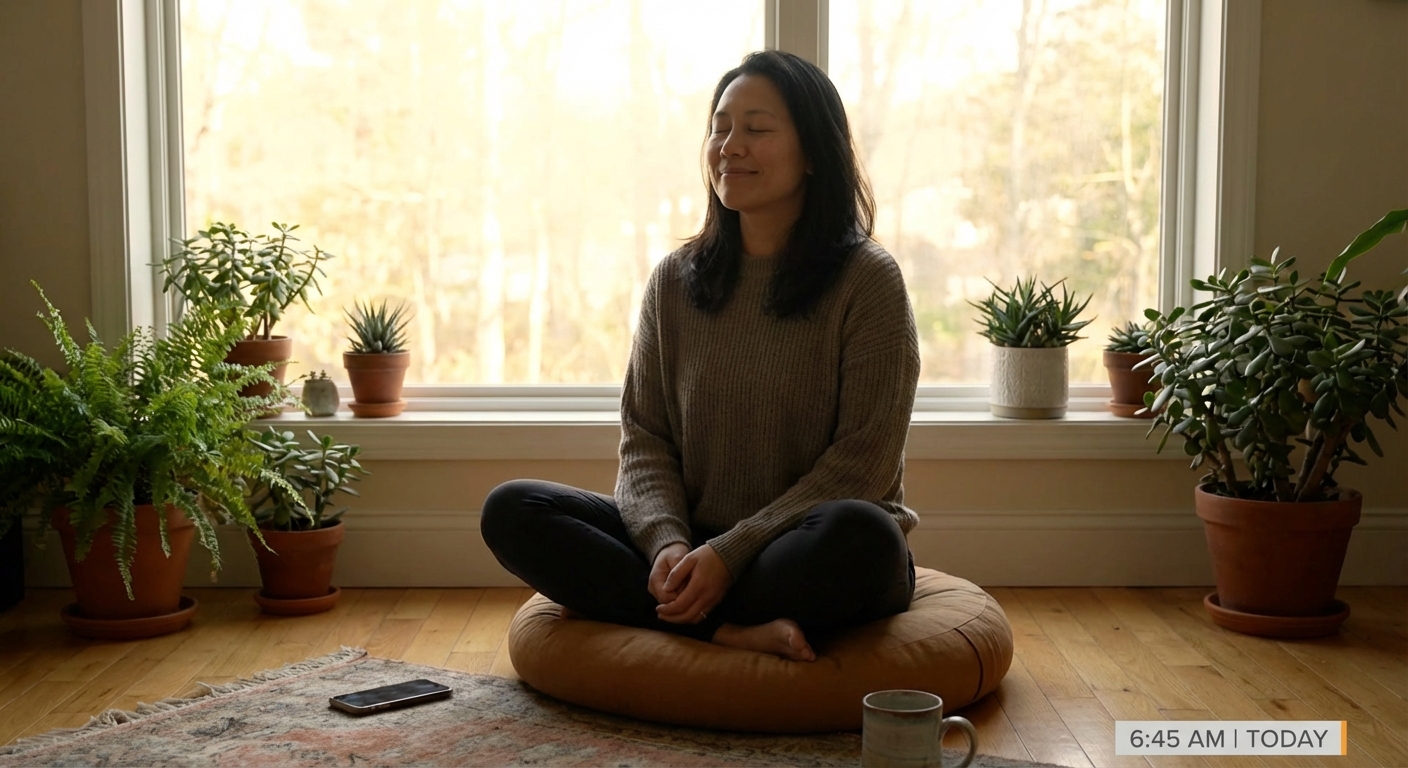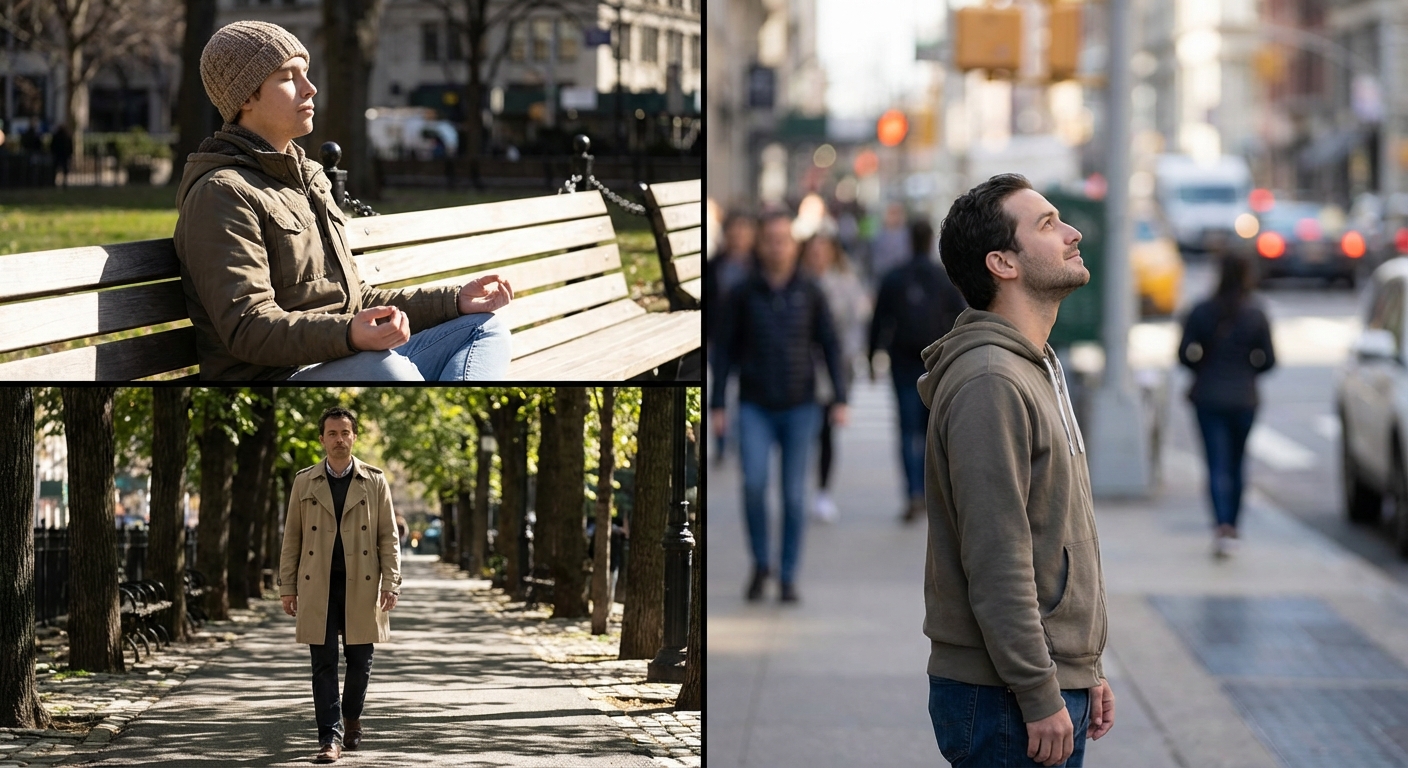
Meditation is often pictured as someone seated cross-legged in silence. While this is a valuable form, it is far from the only way to practice. For some people, especially those with restless energy, physical discomfort, or busy schedules, movement-based or everyday-life meditation can feel more natural and supportive.
Many Paths, One Quiet Intention
Instead of ranking practices, this guide gently compares three main styles—seated, walking, and everyday-life meditation—so you can sense which forms suit you in different seasons of your life.
Seated Meditation: The Stable Hearth
What It Is
Seated meditation typically involves choosing a still posture and focusing attention on an anchor such as the breath, body sensations, sounds, or compassion phrases. The aim is not to become rigidly still, but to settle into a posture that is both steady and kind to the body.
How It Feels
Seated practice can:
- Highlight the busyness of the mind (often more than we expect)
- Offer a clear container to observe thoughts and emotions
- Feel grounding, like returning to a familiar hearth
Over time, many practitioners describe a sense of inner spaciousness, even on days when the mind feels unruly.
Science-Backed Benefits
Research on seated mindfulness and compassion practices suggests they can:
- Improve attention and working memory
- Decrease symptoms of anxiety and depression
- Increase gray matter volume in brain regions related to learning and emotion regulation
- Strengthen the ability to notice thoughts without getting entangled in them
A Short Seated Practice to Try
Posture
Sit on a chair with both feet on the floor. Let your hands rest on your thighs.
Anchor
Focus on the breath at the nostrils or belly.
Return
When thoughts pull you away, softly acknowledge, "Thinking," and return to the breath. Do this for 5–10 minutes.
Seated practice can be especially helpful when you want to explore the inner landscape with some depth and continuity.
Walking Meditation: Presence with Each Step
What It Is
Walking meditation brings awareness to the simple act of moving. It can be done slowly in a quiet space or gently integrated into everyday walks. The focus is on the sensations of the body in motion rather than on reaching a destination.
How It Feels
Walking meditation can:
- Be easier for those who feel agitated or uneasy sitting still
- Help bridge the gap between formal practice and daily life
- Offer a sense of rhythmic, grounded presence
For some, the rhythm of walking naturally soothes the nervous system and helps attention gather.
Science-Backed Insights
While many studies group different types of mindfulness together, movement-based meditation practices, including mindful walking and yoga, have been associated with:
- Reduced anxiety and improved mood
- Better balance and coordination in older adults
- Decreased rumination and improved cognitive flexibility
Movement provides continuous sensory feedback, which can anchor awareness in the present, particularly when thinking feels overwhelming.
A Gentle Walking Meditation Practice
You can try this indoors or outdoors, with 10–20 steps of clear space.
Stand and arrive
Feel your feet on the ground. Notice the distribution of weight.
Begin slowly
As you lift your right foot, silently say, "Lift." As you move it forward, "Move." As you place it down, "Place." Do the same with the left foot.
Stay with sensations
Notice the shifting of weight, the contact with the floor, the subtle movements in your legs and hips.
Return gently
When the mind wanders (planning, reliving, narrating), acknowledge it and return attention to the sensations of walking.
You can adapt this for everyday walking by simply feeling your feet for a few steps between other activities.
Everyday-Life Meditation: Awareness in the Ordinary
What It Is
Everyday-life meditation is the art of bringing mindful awareness into regular activities: washing dishes, speaking with a friend, driving, or folding laundry. It dissolves the perceived boundary between “practice time” and “real life.”
How It Feels
Everyday practice can:
- Make life feel less rushed, even when busy
- Reveal small moments of beauty in the ordinary
- Support more conscious, kind speech and action
Instead of adding something new to your schedule, you infuse what is already there with presence.
Science-Backed Perspective
Studies on informal mindfulness practices show that weaving awareness into daily activities can:
- Increase overall life satisfaction and sense of meaning
- Reduce automatic, habitual reactivity in relationships
- Support more stable mood, especially when combined with some formal practice
Simple Everyday Meditation Invitations
- Mindful handwashing: Notice the temperature of the water, the texture of the soap, the movements of your hands.
- Mindful listening: In one conversation today, listen fully without planning your reply while the other person speaks.
- Mindful transition: Before starting your car or opening your computer, take three conscious breaths.
These tiny shifts help mindfulness become less of a "thing you do" and more of a way you meet each moment.
Comparing the Three: Which Practice When?
Rather than searching for the "best" method, it can be helpful to sense which style supports you under different conditions.
When Seated Meditation May Serve You
- You want to deepen your capacity to be with thoughts and feelings.
- You have a few uninterrupted minutes and a relatively quiet space.
- You feel called to cultivate a sense of inner stillness.
When Walking Meditation May Serve You
- You feel restless, drowsy, or physically uncomfortable sitting.
- Strong emotions feel easier to hold while in motion.
- You want a break from screens while still engaged in gentle activity.
When Everyday-Life Meditation May Serve You
- Your schedule is packed and formal practice feels out of reach.
- You want mindfulness to permeate more of your day-to-day life.
- You feel called to bring more presence into relationships and routine tasks.
You can think of these as three instruments in the same orchestra. Some days, a quiet cello (seated practice) will resonate; others, a steady drumbeat (walking) or the subtle chimes woven through everything (everyday awareness).
A Blended Practice Plan (Softly Held)
If you’d like a gentle way to combine these approaches, consider this flexible framework:
- Morning (5–10 minutes): Seated meditation with breath or body awareness.
- Midday (3–5 minutes): A short walking meditation, perhaps between tasks.
- Throughout the day: Choose one ordinary activity (making tea, washing hands) as an everyday-life practice.
There is no need to follow this perfectly. Let it be a template you adapt according to your energy, health, and responsibilities.
No Wrong Door
Whichever form you choose, the heart of meditation remains the same: a gentle returning to the present moment, again and again, with as much kindness as you can offer yourself.
If seated practice feels impossible today, you have not failed; you might simply need to walk. If walking feels like too much, perhaps one mindful breath while washing a dish is enough. Each is a valid doorway.
Stillness is not the absence of movement; it is the quiet center from which you meet each movement of your life. Meditation—whether seated, walking, or woven into the everyday—is how you learn to visit that center, one breath and one step at a time.