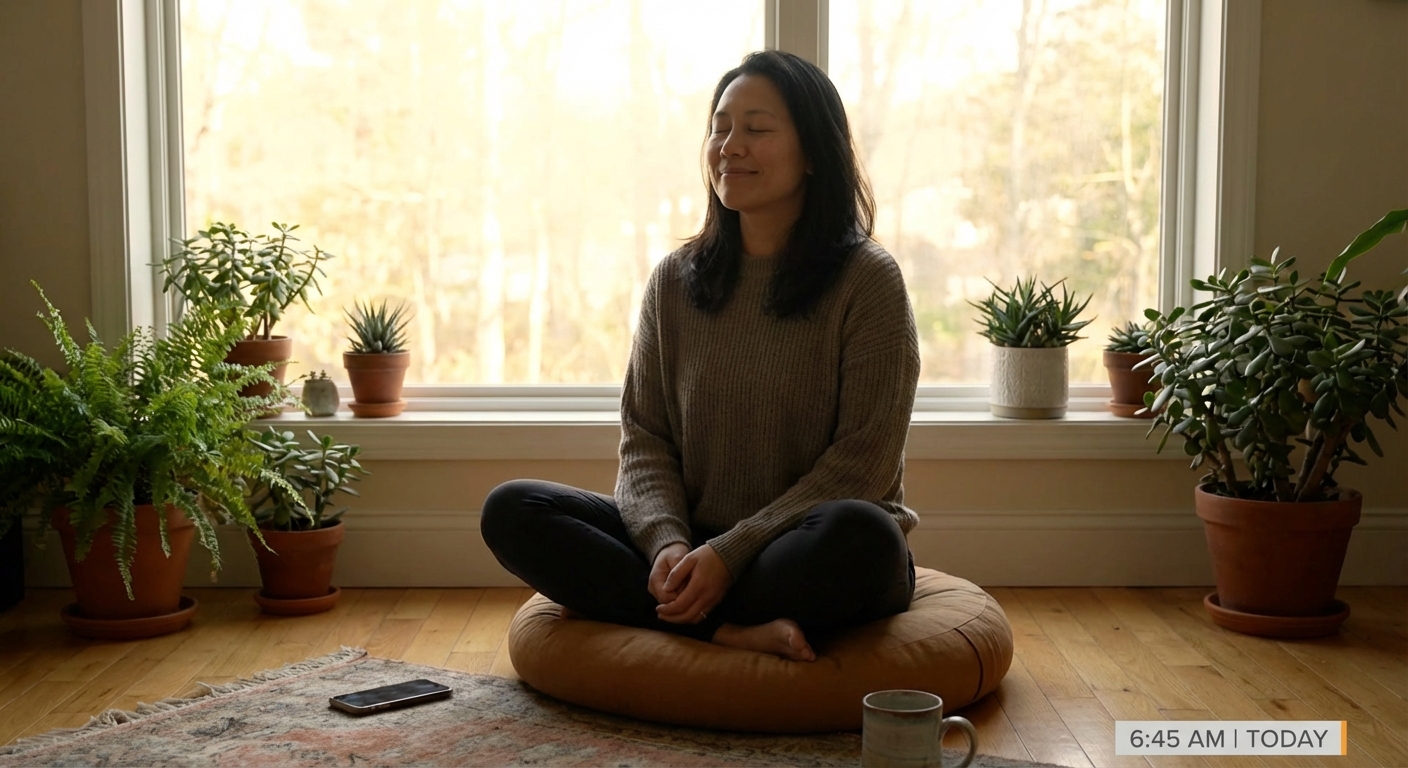
Meditation doesn’t ask you to become a different person. It simply invites you to notice the person who is already here.
Meeting Yourself Where You Are
Whether you are brand new to mindfulness or returning after a long pause, it is completely natural to feel unsure: Am I doing this right? Why is my mind so noisy? In truth, meditation is less about doing and more about relating—relating to your thoughts, emotions, and body with a bit more kindness and a bit less urgency.
In this guide, we’ll explore simple ways to begin or begin again, with practices you can try today and gentle insights from science that affirm what many contemplative traditions have long understood: the mind can be trained to rest.
What Meditation Really Is (and Isn’t)
Many people imagine meditation as a perfectly still person with an empty mind. Real practice looks different.
Meditation is:
- A deliberate pause to pay attention with kindness
- A way to cultivate familiarity with your own inner landscape
- A training in gently returning to the present when you drift away
- Forcing your mind to be blank
- Making every thought or feeling disappear
- A test that you can fail
Meditation is not:
From a scientific perspective, meditation is a form of mental training. Studies using brain imaging have shown structural and functional changes in regions involved in attention, emotional regulation, and self-awareness after consistent practice. But you don’t need a scanner to notice something shifting; small changes in your daily life—like taking one slower breath before reacting—are already meaningful results.
A 5-Minute "Arriving" Practice You Can Try Today
You do not need a cushion, special clothes, or a perfectly quiet space. Let this practice be simple.
Step 1: Choose your posture (1 minute)
Sit in a chair with your feet on the floor, or on a cushion if that’s comfortable. Let your spine be upright but not rigid, as if you are being gently supported from above. Rest your hands on your thighs.
If closing your eyes feels safe, do so. Otherwise, lower your gaze.
Step 2: Feel the body (1 minute)
Bring attention to the contact points: your feet on the floor, your body on the seat, your hands resting. Notice warmth, coolness, pressure, or tingling. There’s nothing to achieve; you’re simply observing.
Step 3: Follow the breath (2 minutes)
Notice the natural rhythm of your breathing. Feel the air moving in and out through your nose, or the rise and fall of your chest or belly.
Silently say to yourself, "In" on the in-breath, "Out" on the out-breath, if you like.
Thoughts will appear. When you notice you’ve wandered—into planning, remembering, or judging—gently acknowledge, "Thinking", and escort your attention back to the breath.
Step 4: Soften into kindness (1 minute)
Before ending, place a hand on your heart or wherever feels comforting. Offer a simple phrase to yourself:
- May I be at ease, just as I am right now.
- May I meet this day with a little more gentleness.
Take one deeper breath, then open your eyes or lift your gaze.
That’s it. Five minutes of arrival.
Why Your Busy Mind Is Not a Problem
It’s easy to conclude that you’re “bad” at meditation because your thoughts are loud and persistent. But the appearance of thoughts is not a sign of failure; it’s a sign that you’re human.
From a neuroscience standpoint, the brain’s default mode network—active in mind-wandering, self-referential thinking, and daydreaming—naturally generates thoughts. Regular meditation has been shown to alter the activity and connectivity of this network, often leading to:
- Less reactivity to negative thoughts
- More flexibility in shifting attention
- Greater awareness of mental habits (like rumination)
Notice that these benefits come not from stopping thoughts but from changing your relationship to them. Every time you gently return to the breath, you’re practicing that new relationship.
Think of each distraction as a small, unexpected exercise repetition. You notice you’ve wandered, and you come back. That return is the heart of the practice.
Making Meditation Feel Safe and Kind
Meditation can sometimes bring us into closer contact with difficult emotions or memories. This is not a sign you’re doing something wrong—it means you are becoming more aware.
Still, it’s important to move at a pace that feels manageable.
Consider these gentle guidelines:
Set soft expectations
Instead of aiming to be calm, aim simply to be present with whatever arises, including restlessness or numbness.
Short and consistent is enough
Research suggests that even 10–15 minutes a day can support changes in attention and mood over time. If that feels too long, start with 3–5 minutes. Consistency matters more than duration.
Use the body as an anchor
If staying with the breath feels agitating, shift your focus to sensations in the hands or feet, or to sounds in the environment. Your anchor can be anything that helps you feel grounded.
Know when to pause
If sitting with your inner experience becomes overwhelming, it is wise to stop, open your eyes, and look around. Feel your feet on the floor, name what you see in the room, or step outside for fresh air. Kindness includes knowing your limits.
If you have a history of trauma or intense anxiety, it can be helpful to practice with the guidance of an experienced teacher or a trauma-informed therapist.
A 3-Breath Reset for Any Moment of the Day
Meditation doesn’t have to be separate from life. Use this brief practice whenever you feel scattered, stressed, or in need of a pause.
Breath One – Arrive
Feel your feet on the ground. Notice one sensation in your body.
Breath Two – Soften
Invite a small release in the jaw, shoulders, or belly. Nothing forced, just a hint of softening.
Breath Three – Intend
Silently set an intention: "For this next moment, may I respond rather than react."
Then continue with your day, carrying a slightly wider sense of space inside you.
Beginning Again, As Many Times As You Need
Meditation practice, like life, is rarely linear. There will be days when your attention feels steady and days when it feels impossible to sit still. There may be weeks or months when you drift away from practice entirely.
None of this disqualifies you.
Each time you remember—even in the middle of washing dishes or waiting in line—that you can take one conscious breath, you are already meditating. Each time you sit down, even for a few minutes, you are honoring a quiet intention to relate to your life with more presence.
You are not behind. You are not late. You are simply arriving, one breath at a time.
A Gentle Invitation
If you wish, choose one small step for today:
- Sit for five minutes with your breath
- Try the 3-breath reset between tasks
- Place a hand on your heart once today and say, "May I be gentle with myself."
Let your practice be humble and real, woven into the rhythm of your actual life. Over time, these small, kind moments of awareness can become a quiet refuge you can return to, whenever you need to rest in the quiet of your own presence.